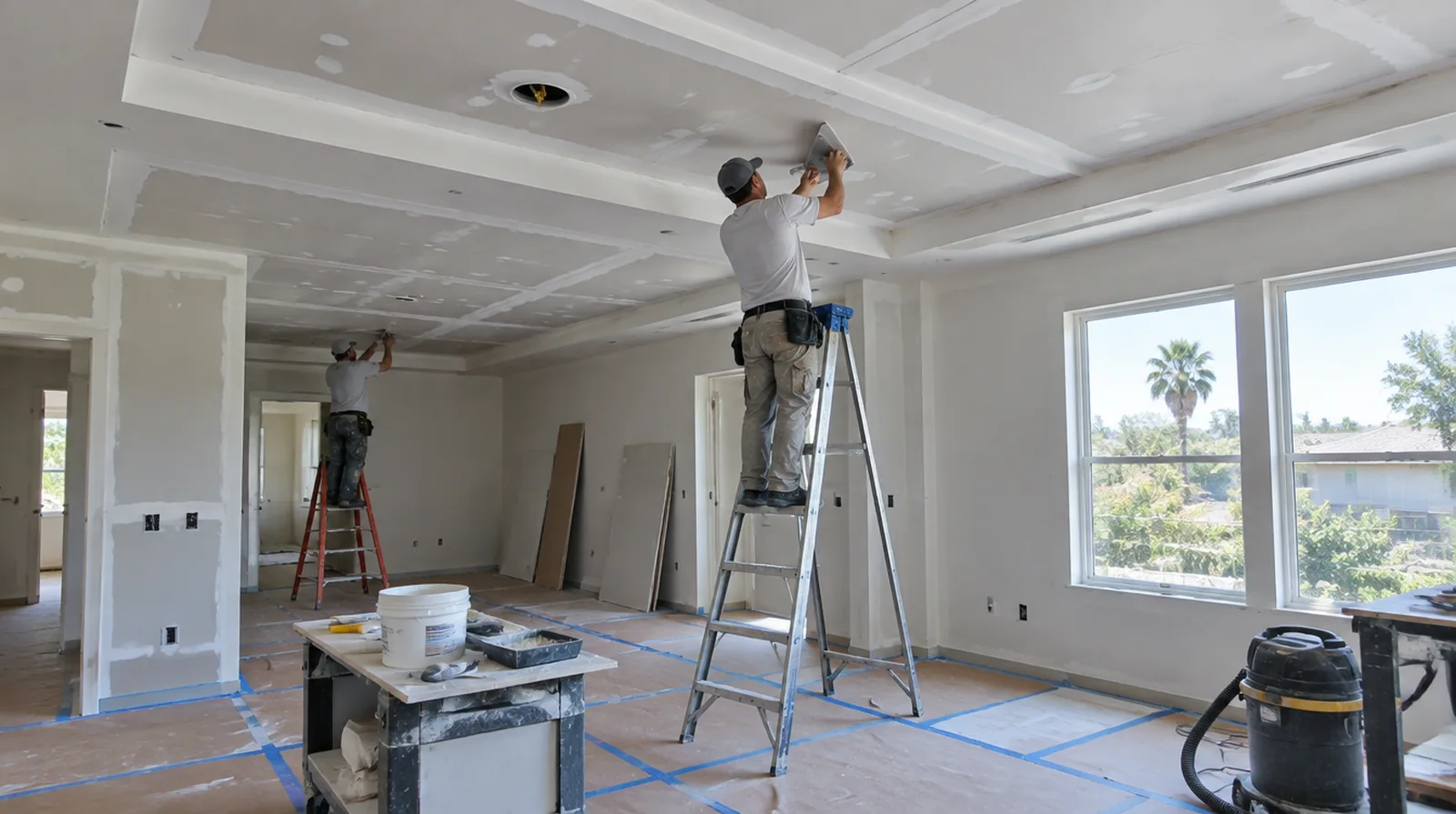
Set the repainting scope
Fresh paint over a local patch may contrast with a ceiling that has aged over time. A broader repaint to a logical room boundary can provide a more even decorative result. When panel replacement exposes a cavity, resolve any required inspection before that opening is closed and the finishing work begins.
Check the source of damage
A visible overhead mark may be evidence of a problem in a service or space above the room. The cause needs resolution before cosmetic repair can reasonably be expected to last. For a planned new wall mounted fixture, resolve its backing requirements while the cavity remains open instead of cutting into completed drywall later.
Address isolated stains
A dry repaired ceiling may still need a compatible stain blocking primer before decorative paint. Primer selection depends on the remaining discoloration and ought not to be used to conceal active moisture. Where a future fixture will be installed, coordinate any required backing while the cavity is accessible rather than reopening the completed wall.
Discuss texture expectations
Determine whether the restored area should be smooth or carry an original decorative pattern. An agreed sample can show the likely limits of a local texture blend before the full repair proceeds. If scheduling is the main concern, separate hands on labor from drying intervals instead of treating every visit as a full day of active work.
Cut back to sound material
Water softened gypsum and loose edges do not provide a dependable base for a new patch. The removal boundary should reach stable material and allow the replacement to be properly supported. Where flooring is staying in place, agree on protective coverings and check that tools and material handling will not damage the visible finish.
Plan overhead access
Plan suitable overhead working access around the interior height and its contents. Large fixtures and delicate flooring may influence setup time more than the size of the damaged spot. When panel replacement exposes a cavity, resolve any required inspection before that opening is closed and the finishing work begins.
Identify the existing surface
Check whether the overhead finish is gypsum board, plaster or a mixture of older layers. The repair method should match the actual construction instead of assuming every white surface is drywall. If the coating stability is unclear, assess which layers are adequately bonded and which ought to be removed rather than simply hidden beneath new material.
Evaluate sagging sections
A drooping panel requires an assessment of fastening, support and material condition rather than a surface skim alone. Keep people away from an unstable area while the suitable professional evaluates it. If access passes through a shared space, arrange protection and a delivery route that do not unnecessarily obstruct other occupants.
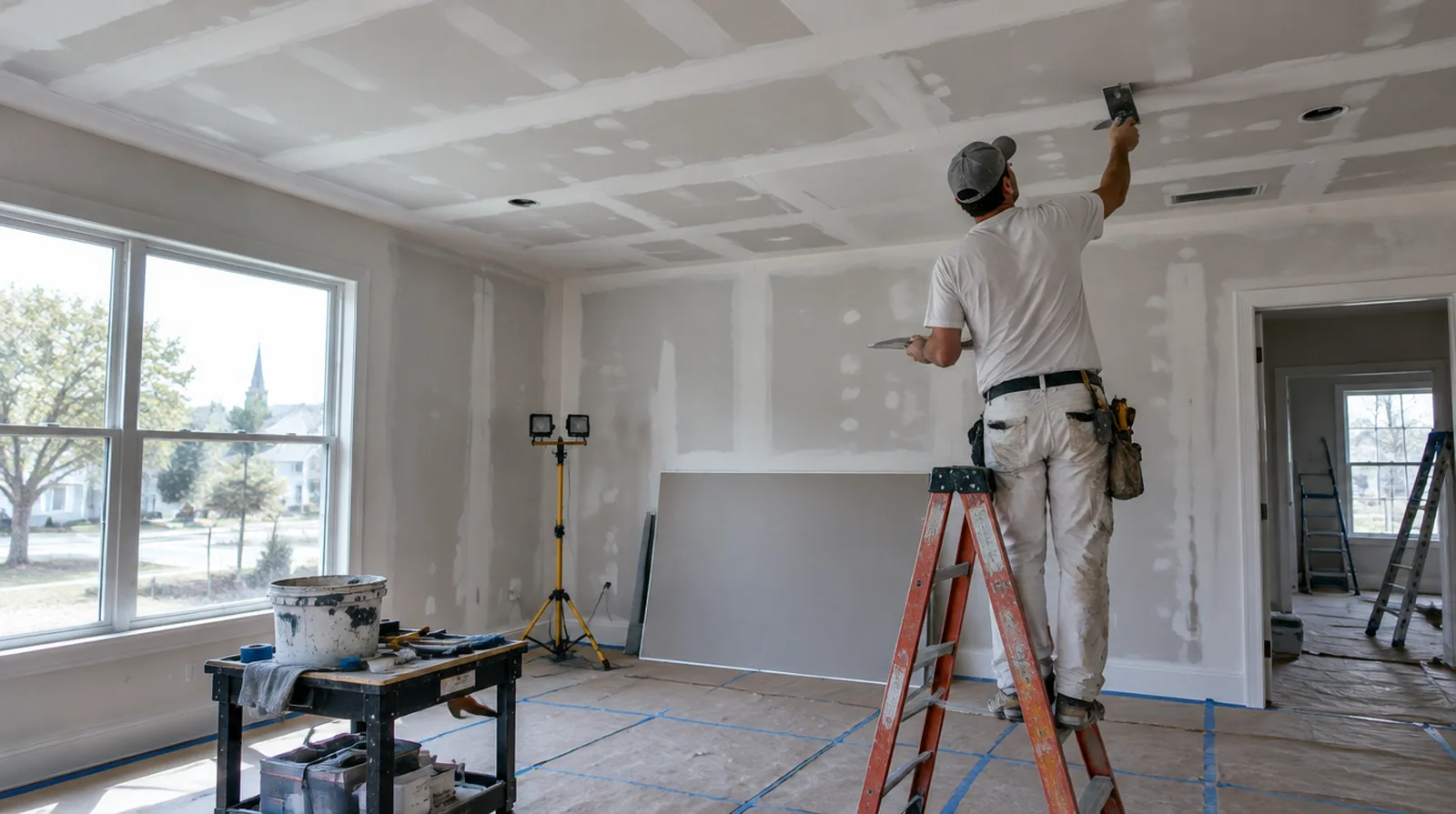
Separate fixtures from board work
Handling lights, sprinkler fittings and air grilles could call for suitable trades and building coordination. Clarify who disconnects and reinstalls anything that interferes with access to the damaged area. For a wall receiving a decorative covering, provide its preparation requirements early adequate for the drywall finish to support that product.
Add reliable backing
A ceiling patch needs fastening support on its edges instead of relying on compound to carry its weight. Matching the board thickness helps avoid a noticeable step between old and new surfaces. For a surface that will receive wall covering, share the product requirements early so the finishing stage supports the planned decorative treatment.
Project context in Metairie
Once the assembly is ready, inspect the proposed blend from the room entry and near the window. Warm humid conditions make protected storage and verified drying useful parts of the schedule.
Scope questions before finishing
For a limited patch requiring substantial setup, assess the complete package of access and protection rather than relating cost only to the opening size.
If the completion date matters most, allow for intervals between coats as well as active labor rather than assuming the entire process happens continuously.
If there is a fixed move in date, reserve enough time for the coating stages after drywall work rather than counting only the installation period.
For an older repair with no clear history, describe when the mark first appeared and whether it has changed through more than one season.
When concealed damage is possible, establish how additional findings and any proposed removal will be recorded before the scope changes.
When the same defect has returned, share information about previous repair methods so the next assessment can consider why they did not last.
At the handover inspection, review the finish from ordinary room positions using the lighting conditions that were agreed for the work.
At a ceiling or wall containing fittings, assign removal and reinstatement duties for the affected devices before repair access is needed.
When the decorative coating has been selected, tell the finisher its intended sheen and color while the surface preparation standard is still being agreed.
For a room with restricted airflow, plan drying conditions alongside dust protection and the comfort of people occupying neighboring spaces.
At an edge beside built in furniture, state whether the obstruction will be removed or whether finishing stops at the section that can be reached.
If the problem developed after another renovation, explain which nearby materials or building systems changed before the damage became visible.
Explore the Metairie drywall overview for related options, or read the project planning information before arranging the next stage.
More planning details for Metairie
In Metairie, an old ceiling water mark should prompt a straightforward history check before any surface is covered. Record what caused it, what was done to stop the source and whether the mark has changed since then. A dry stain and softened gypsum need different decisions, and a coating cannot stand in for necessary material replacement.