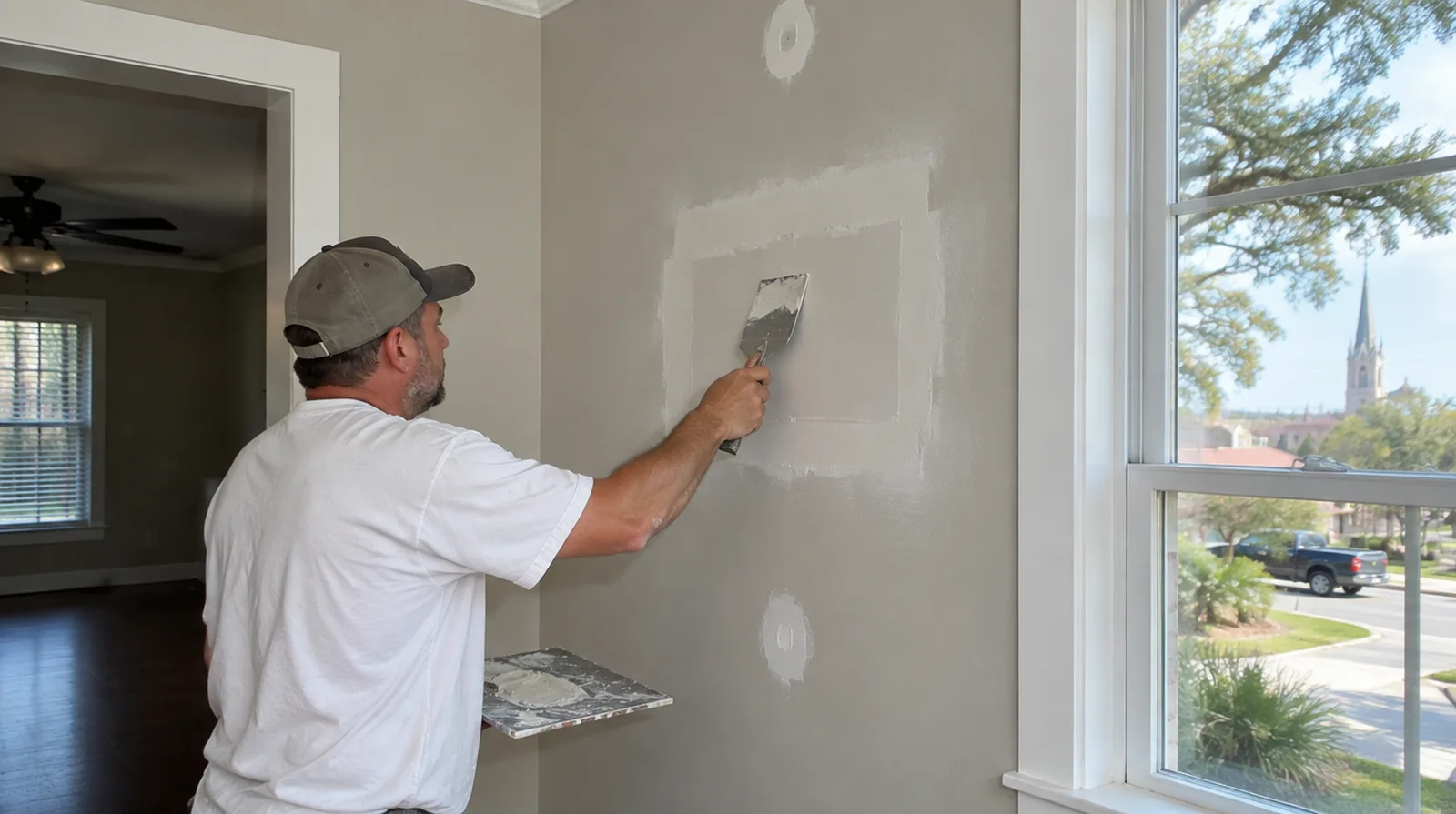
Feather beyond the opening
The visible finishing area typically extends farther than the hole because a gradual taper hides the repair edge. The gradual transition is notably important where a window lights the surface from the side. When the protected room includes a doorway, check the clearance for panel movement as well as the amount of space available for finishing tools.
Review with side lighting
Use an angled view as well as a direct view when reviewing a finished patch. Window light may reveal a contour that ordinary room lighting hides, while paint sheen creates a distinct issue. If scheduling is the main concern, separate hands on labor from drying intervals instead of treating every visit as a full day of active work.
Build thin finishing coats
Shaping a repair through thinner coats gives more control than depositing all the material at once. Each layer needs enough time needed for drying before the next pass can be judged accurately. If the original finish is unusual, keep a small reference sample or a close photograph to support the discussion about blending and restoration.
Prepare for primer
Fresh compound and existing painted drywall absorb coatings differently unless the repair receives suitable primer. Establish whether the quote includes priming or ends with a sanded surface ready for the painter. Where the wall surface meets fixed furniture, clarify whether removal is included or whether the finish will terminate at the accessible edge.
Document recurring movement
A crack that repeatedly reappears could need the cause investigated before more cosmetic work. A drywall estimate should state when another trade needs to investigate before surface work proceeds. When more damage could be hidden, ask how any added scope will be documented before extra material is removed or replaced.
Handle small fastener marks
A bump over a fastener may reflect separation or movement at the panel support. Correct the fastening condition as needed before covering the mark with a new finishing coat. For a repair that crosses several surfaces, measure the affected planes separately so the estimate can explain where each finishing treatment starts and stops.
Protect adjacent surfaces
Small wall repairs can still distribute fine dust through the space if protection is inadequate. Identify the possessions to move and agree which adjacent spaces have to stay usable. When concealed damage is possible, establish how additional findings and any proposed removal will be recorded before the scope changes.
Support the replacement
Larger openings need a fitted board patch secured to framing or suitable backing rather than a thick mound of compound. Use a replacement that aligns with the original panel face before attempting to blend the joints. If the wall work belongs to a broader renovation, coordinate its order with flooring, cabinetry and trim rather than scheduling finishing in isolation.
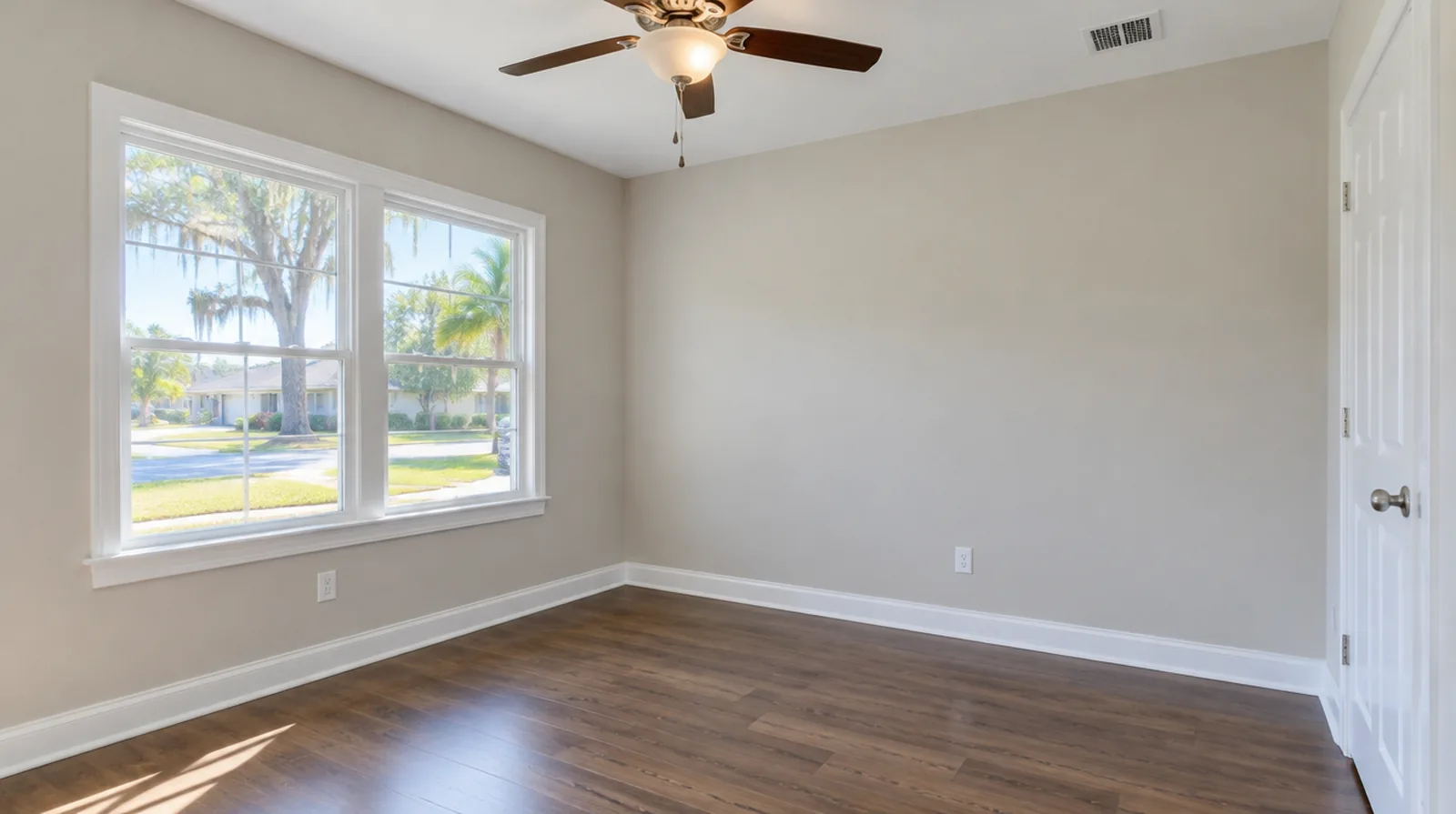
Choose the patch boundary
The repair must reach gypsum and paper that remain intact, rather than stopping at the visible outline of the hole. A tidy rectangular cut often provides stronger backing than following an irregular broken edge. When a wall has repeated defects, keep a record of earlier repair attempts so a new assessment does not simply repeat an unsuccessful approach.
Set the paint boundary
Even a well blended patch can remain visible when touched up with an aged or unavailable paint color. Repainting the full wall from corner to corner may give a more consistent appearance. At a repair beside an opening, allow clearance for moving board through the doorway and space to use the finishing tools effectively.
Project context in Metairie
Warm humid conditions make protected storage and verified drying useful parts of the schedule. Once the assembly is ready, inspect the proposed blend from the room entry and near the window.
Scope questions before finishing
For a repair that crosses several surfaces, measure the affected planes separately so the estimate can explain where each finishing treatment starts and stops.
Where the quoted work stops before painting, request a clear description of what remains so the next decorating stage can be priced realistically.
For a surface carrying numerous paint layers, discuss whether differences in the retained profile or sheen justify decorating a broader area.
If access passes through a shared space, arrange protection and a delivery route that do not unnecessarily obstruct other occupants.
When the wall has strong reflected light, look at the full plane rather than judging only the narrow strip immediately beside the patch.
For work spread across different planes, record their dimensions separately and describe the boundary of the treatment on each surface.
Before comparing two proposals, check that both include the same protection, finishing and cleanup boundaries rather than comparing totals alone.
When more damage could be hidden, ask how any added scope will be documented before extra material is removed or replaced.
For a planned new wall mounted fixture, resolve its backing requirements while the cavity remains open instead of cutting into completed drywall later.
If the finish paint is already chosen, share its sheen and color early because those choices influence how preparation of the surface is judged.
When a paint contractor follows the drywall work, define the surface condition being handed over and decide who handles any minor final touch ups.
When the decorative coating has been selected, tell the finisher its intended sheen and color while the surface preparation standard is still being agreed.
Explore the Metairie drywall overview for related options, or read the project planning information before arranging the next stage.
More planning details for Metairie
In Metairie, an old ceiling water mark should prompt a straightforward history check before any surface is covered. Record what caused it, what was done to stop the source and whether the mark has changed since then. A dry stain and softened gypsum need different decisions, and a coating cannot stand in for necessary material replacement.