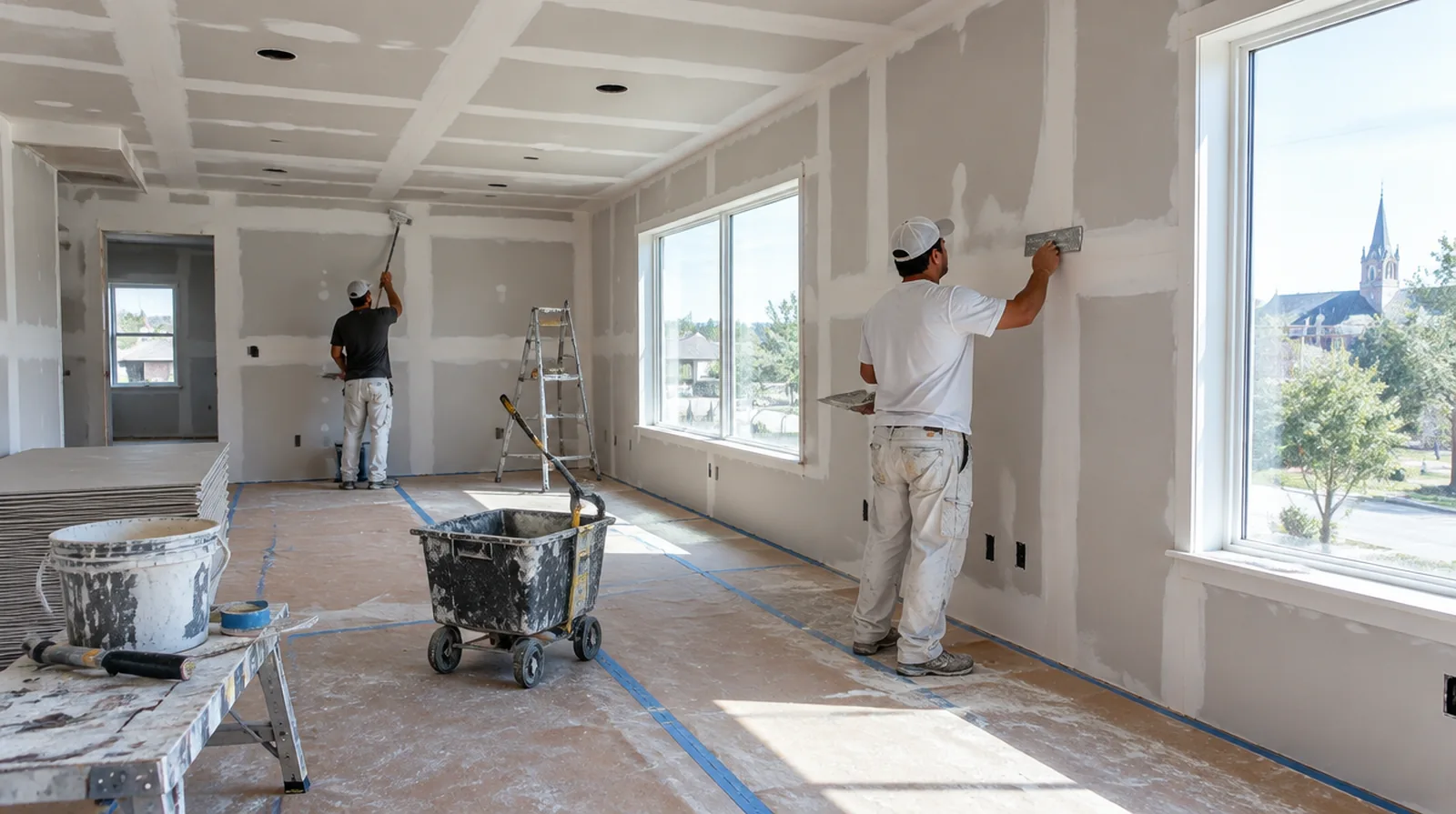
Inspect the whole wall
Review corners, returns and service openings as well as the straight seams in the main wall. Check the finished plane under the planned lighting and from a side angle where possible. If a room has only limited ventilation, discuss how the finishing materials can dry without disrupting comfort or spreading dust elsewhere.
Keep external corners straight
Corner bead provides a consistent line but needs secure installation and sufficient compound coverage. Resolve distortion or damage to the bead before successive coats make correction more demanding. When painting is outside the proposal, describe the remaining decorative preparation clearly so another contractor can price that stage accurately.
Allow genuine drying time
Do not judge a coat ready solely because its outer face appears firm. The drying interval changes with indoor humidity, temperature and the available movement of air. Where the quoted work stops before painting, request an explicit description of what remains so the next decorating stage can be priced realistically.
Build the seam gradually
Successive coats widen the finished area and soften the transition from joint to board face. Square cut sheet ends need particular care because they do not offer the recess of tapered factory edges. When the project space includes a doorway, check the clearance for panel movement as well as the amount of space available for finishing tools.
Consider a skim layer
Light passing across a wall can emphasize the difference between finished joints and the panel paper. A suitable skim treatment may help create a more uniform surface when the specification calls for it. When the wall surface has strong reflected light, look at the full plane instead of judging only the narrow strip immediately beside the patch.
Embed the tape
Tape needs a properly bonded bedding coat underneath its full length. At an internal angle, form a clean crease and finish both sides without leaving unsupported edges. When painting is outside the proposal, describe the remaining decorative preparation clearly so another contractor can price that stage accurately.
Assess the hung board
Finishing cannot fully correct unsupported edges or panels that sit on differing planes. Fastener depth and board alignment should be checked before joint treatment begins. Where occupants have dust sensitivity concerns, agree containment and cleaning measures before settling the way the interior will be staged.
Choose joint materials
Bedding coats and final coats serve distinct purposes and may use differing compatible compounds. Selection should reflect joint type, room conditions and the manufacturer guidance rather than convenience alone. At a surface receiving strong window light, review a dried trial from the side in addition to the normal straight view of the wall.
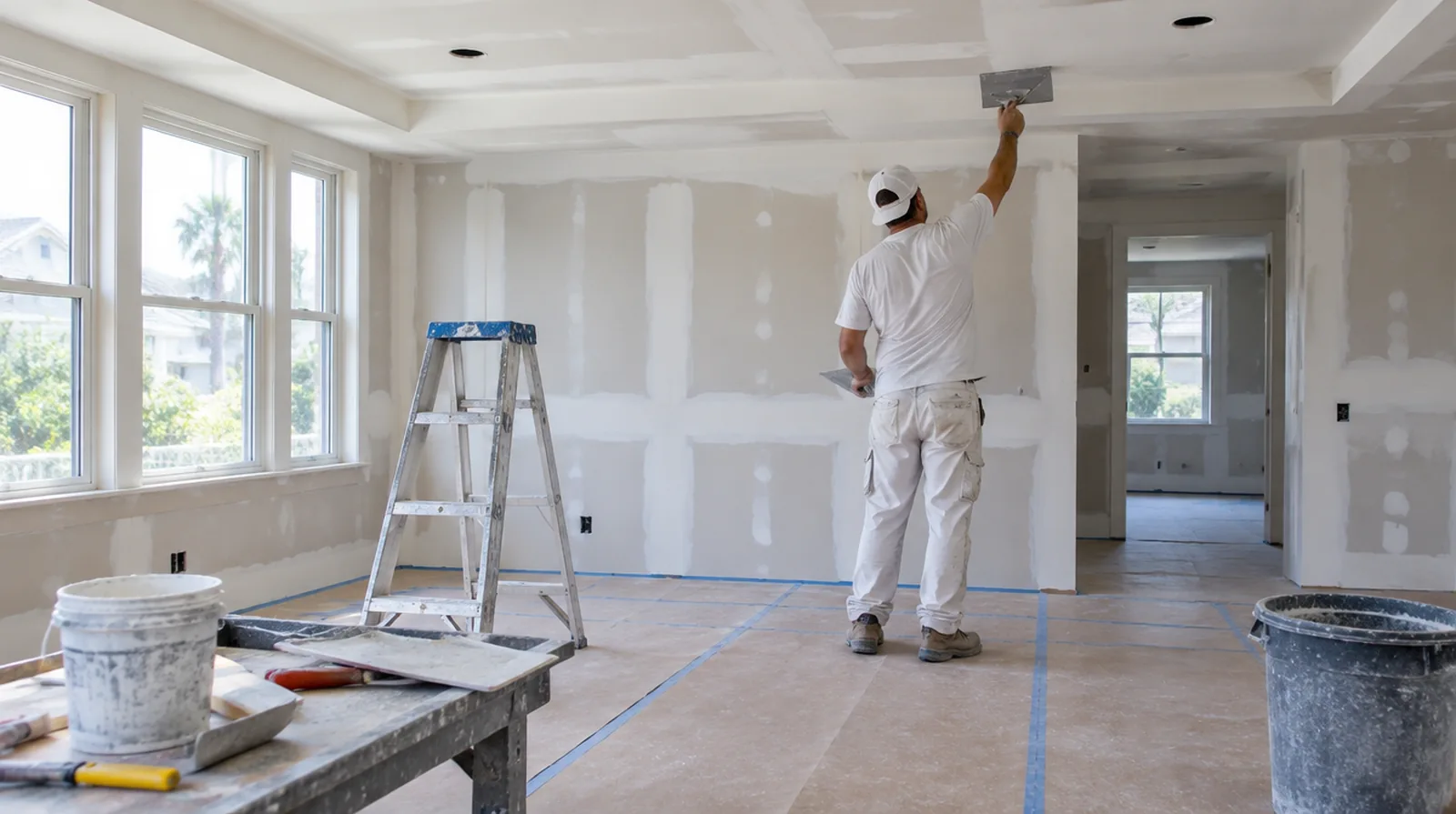
Coordinate with the painter
A primer coat sometimes makes small surface defects easier to identify than raw white compound. Decide beforehand who handles minor touch ups and whether a post primer review is included. At a surface receiving strong window light, review a dried trial from the side in addition to the normal straight view of the wall.
Cover fastener heads
Fastener dimples need sufficient compound to level the surface without leaving raised spots. Adjust any projecting or paper breaking screw before applying material over the location. Where several contractors share the renovation, identify the inspection and handover milestones that determine when each following stage can proceed.
Project context in Metairie
Once the assembly is ready, inspect the proposed blend from the room entry and near the window. Keep any specialist moisture or remediation work separate from the ordinary wall finishing scope.
Scope questions before finishing
When comparing competing estimates, make sure their protection, surface finish and disposal allowances describe equivalent work before comparing the final prices.
If the project is part of a larger remodel, settle the sequence with flooring, trim and cabinet work before setting a final finishing date.
For an initial assessment from pictures, provide an overall room photograph and a detailed view of the defect so both context and scale are apparent.
Where several contractors share the renovation, identify the inspection and handover milestones that determine when each following stage can proceed.
When painting is outside the proposal, describe the remaining decorative preparation clearly so another contractor can price that stage accurately.
If the coating stability is unclear, assess which layers are adequately bonded and which ought to be removed instead of simply hidden beneath new material.
If the proposal requires return visits, identify the purpose of each stage and the intervals during which finishing material needs to remain undisturbed.
When a quote includes multiple visits, ask what happens during each stage and when the room needs to remain undisturbed between coats.
For a planned new wall mounted fixture, resolve its backing requirements while the cavity remains open instead of cutting into completed drywall later.
At a surface receiving strong window light, review a dried trial from the side in addition to the normal straight view of the wall surface.
When the same defect has returned, share information about previous repair methods so the next assessment can consider why they did not last.
If the wall work belongs to a broader renovation, coordinate its order with flooring, cabinetry and trim instead of scheduling finishing in isolation.
Explore the Metairie drywall overview for related options, or read the project planning information before arranging the next stage.
More planning details for Metairie
In Metairie, an old ceiling water mark should prompt a straightforward history check before any surface is covered. Record what caused it, what was done to stop the source and whether the mark has changed since then. A dry stain and softened gypsum need different decisions, and a coating cannot stand in for necessary material replacement.