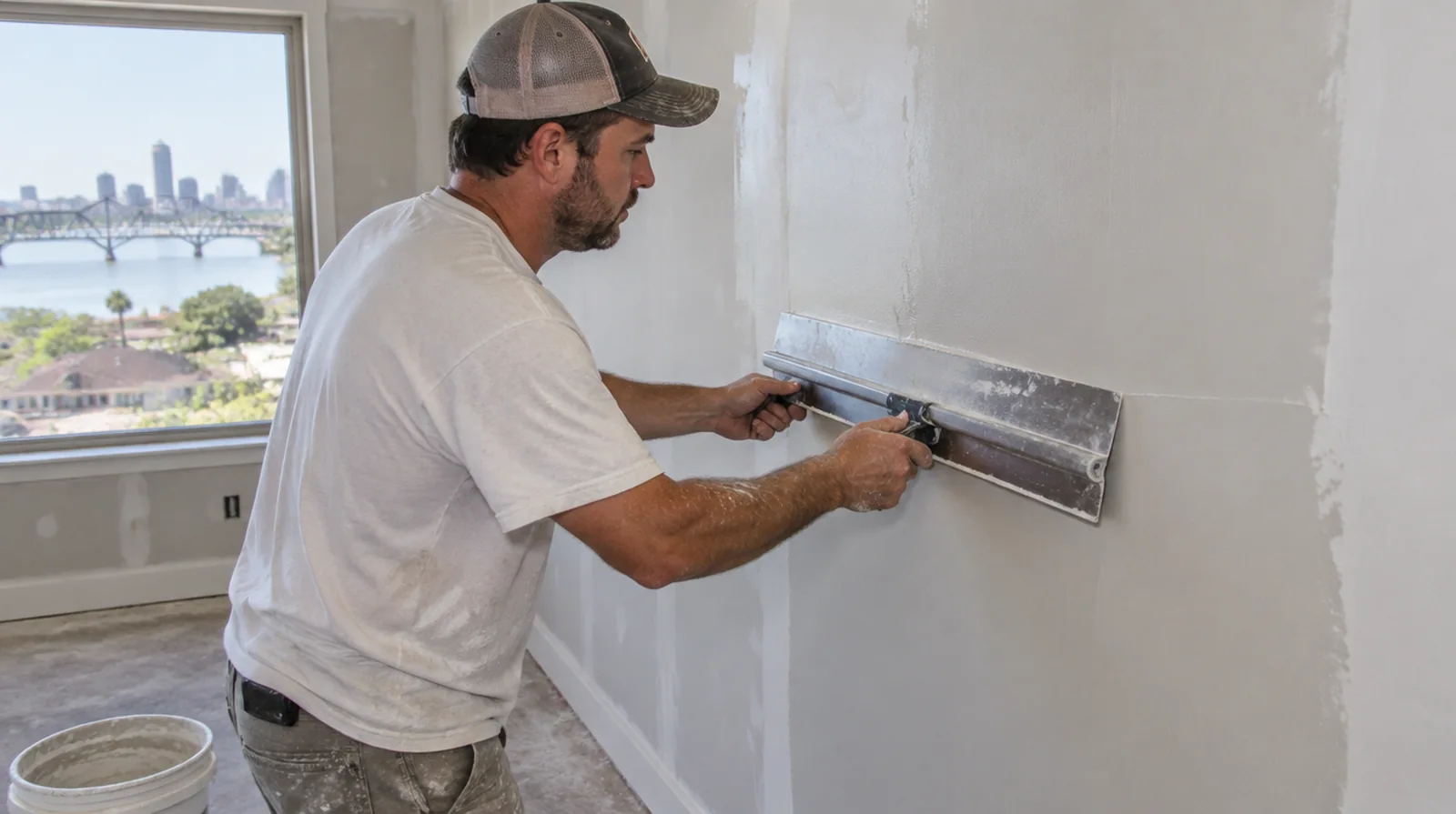
Clean and prepare the wall
Dust, grease and incompatible residues can interfere with adhesion. Preparation may include cleaning and a suitable bonding treatment based on the condition of the existing surface. If a household member is sensitive to dust, discuss containment and cleaning expectations before choosing how to stage the room work.
Work around trim carefully
Protect the junctions around frames, baseboards and fittings while planning how the new surface will meet them. Review whether removing trim is worthwhile or whether the finish will stop cleanly against it. If there is a fixed move in date, reserve enough time for the coating stages after drywall work rather than counting only the installation period.
Let each coat dry
Allow each application to become ready for the next under the space conditions actually maintained. Disturbing soft material too early can undermine an otherwise careful smoothing pass. When more damage could be hidden, ask how any added scope will be documented before extra material is removed or replaced.
Assess the existing coating
Loose paint and unstable layers need attention before a thin skim can bond reliably. Separate peeling or poorly bonded material from a stable wall that merely needs smoothing. When concealed damage is possible, establish how additional findings and any proposed removal will be recorded before the scope changes.
Inspect using side light
Check the dried surface with light crossing it as well as light facing it directly. The review should reflect the conditions that will matter when the space returns to everyday use. Before comparing two proposals, check that both include the same protection, finishing and cleanup boundaries rather than comparing totals alone.
Stabilize torn paper
Exposed drywall paper can bubble when it receives wet compound without suitable preparation. Damaged spots need an appropriate sealing approach before the broad finishing coats are applied. If the project is part of a larger remodel, settle the sequence with flooring, trim and cabinet work before setting a final finishing date.
Refine with minimal sanding
Good application reduces the amount of sanding needed to achieve a uniform finish. Even so, plan dust protection and extraction for the fine particles produced by broad surface work. When reviewing the finished work, use the agreed lighting and natural room viewpoints so the assessment reflects the intended use of the space.
Define the smoothing target
Flattening a light texture is differing from correcting deep waves across an entire wall. The scope should describe what the skim is expected to improve and what remains outside that finish treatment. In a room with little free floor space, identify temporary storage for belongings and establish enough clearance for the work before delivery.
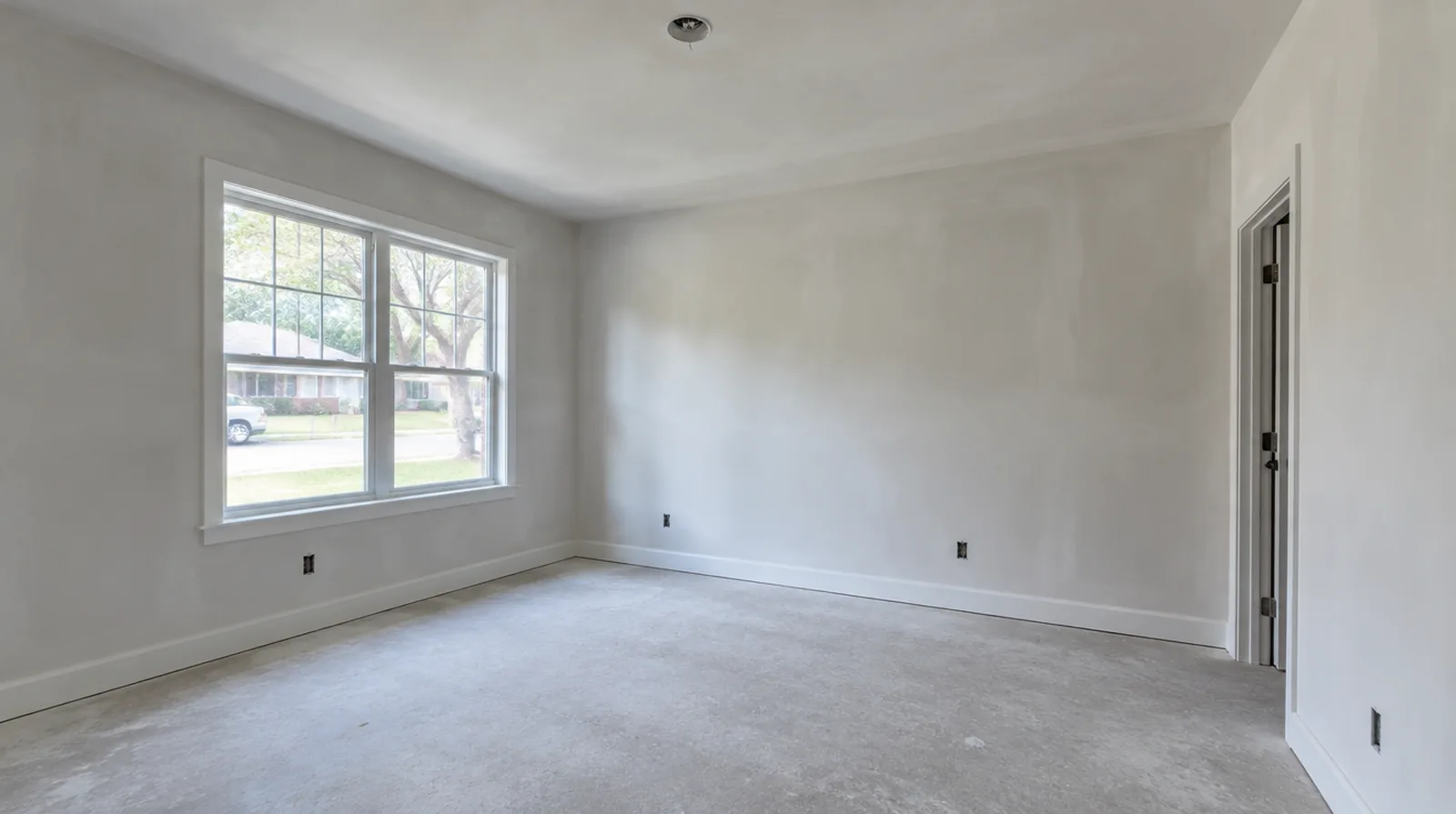
Apply controlled thin layers
A skim coat is intended to refine the surface rather than build a heavy unsupported layer. Deeper texture may require successive passes to level low spots without overloading the high points. For a project with several trades, agree which inspection or handover point must happen before the next person starts work.
Prime before decoration
Fresh skim compound needs an suitable primer before the finish paint is applied. Primer helps equalize absorption and may reveal small touch ups that should be resolved before the final coat. In a room with little free floor space, identify temporary storage for belongings and establish adequate clearance for the work before delivery.
Project context in Metairie
Once the assembly is ready, inspect the proposed blend from the room entry and near the window. A dry stain and softened gypsum need different decisions, and a coating cannot stand in for necessary material replacement.
Scope questions before finishing
For work spread across distinct planes, record their dimensions separately and describe the boundary of the treatment on each surface.
When more damage could be hidden, ask how any added scope will be documented before extra material is removed or replaced.
When the history of a repair is uncertain, note when it became noticeable and whether its appearance has altered across differing seasons.
If an independent painter completes decoration, agree the condition of the handed over surface and assign responsibility for small final corrections.
Where existing floors will remain, specify protective measures and review the path used by panels, equipment and finishing tools.
When a quote includes multiple visits, ask what happens during each stage and when the room needs to remain undisturbed between coats.
Where occupants have dust sensitivity concerns, agree containment and cleaning measures before settling the way the room will be staged.
If there is a fixed move in date, reserve adequate time for the coating stages after drywall work rather than counting only the installation period.
When the wall has strong reflected light, look at the full plane rather than judging only the narrow strip immediately beside the patch.
At a repair beside an opening, allow clearance for moving board through the doorway and space to use the finishing tools effectively.
When building management controls access, agree delivery hours and common area protection before committing to a start or finish date.
For a distinctive existing pattern, retain a reference sample or detailed picture to make the matching discussion more specific.
Explore the Metairie drywall overview for related options, or read the project planning information before arranging the next stage.
More planning details for Metairie
In Metairie, an old ceiling water mark should prompt a straightforward history check before any surface is covered. Record what caused it, what was done to stop the source and whether the mark has changed since then. Warm humid conditions make protected storage and verified drying useful parts of the schedule.